



Welcome
Our quest in the Geological Sciences is to understand the dynamic physical and chemical changes that have occured over the past 4.6 billion years in order to meet the challenges that are presented by the rapid changes Earth experiences today.
based on the knowledge of the past.
We strive to understand global climate change, catastrophic events such as tsunamis, earthquakes and volcanic eruptions, mountain building, rising sea level, diminishing water and mineral resources, and the history of life with a goal to forge a better relationship between modern society and the natural environment in which we dwell.
Outcrop of Honor
Put your name -- or memorial -- on the wall . . . Commemorate your link to UF Geological Sciences, or memorialize someone or some time that was special to you! Here’s a tangible way for alumni and friends of the department to treasure those memories—the Outcrop of Honor recognition wall. By putting your personal message on a brass nameplate affixed to a beautiful 12”x12” natural polished rock slab, your connection to the department will be recognized permanently inside Williamson Hall. Take a look at the slab samples (remember, the color on your monitor may be slightly different than the actual stone color). Order your piece of the Outcrop of Honor recognition wall today by completing the application at this link: Outcrop of Honor brochure pdf or call (352) 392-2231.

GLY5786L/4930 Topics in Field Geology of the Bahamas -- March 2011:
The class is standing on the Cockburn Town reef, a Marine Isotope Stage 5e (about 125 ky) reef exposed a couple meters above modern sea level. The students are framing the cross section of a Diplora strigosa, the common brain coral, preserved in growth position.
Watch "Earth: Making of a Planet", a two-hour-long special premiering March 6th on the National Geographic channel that documents how life evolved from microscopic organisms into the humans, plants and animals living today. Associate Professor Dr. Joseph Meert was involved in coverage on early Earth, the breakup of Pangea and the formation of the Middle Eastern oil fields.
Faculty Feature
Dr. Joseph Meert
|
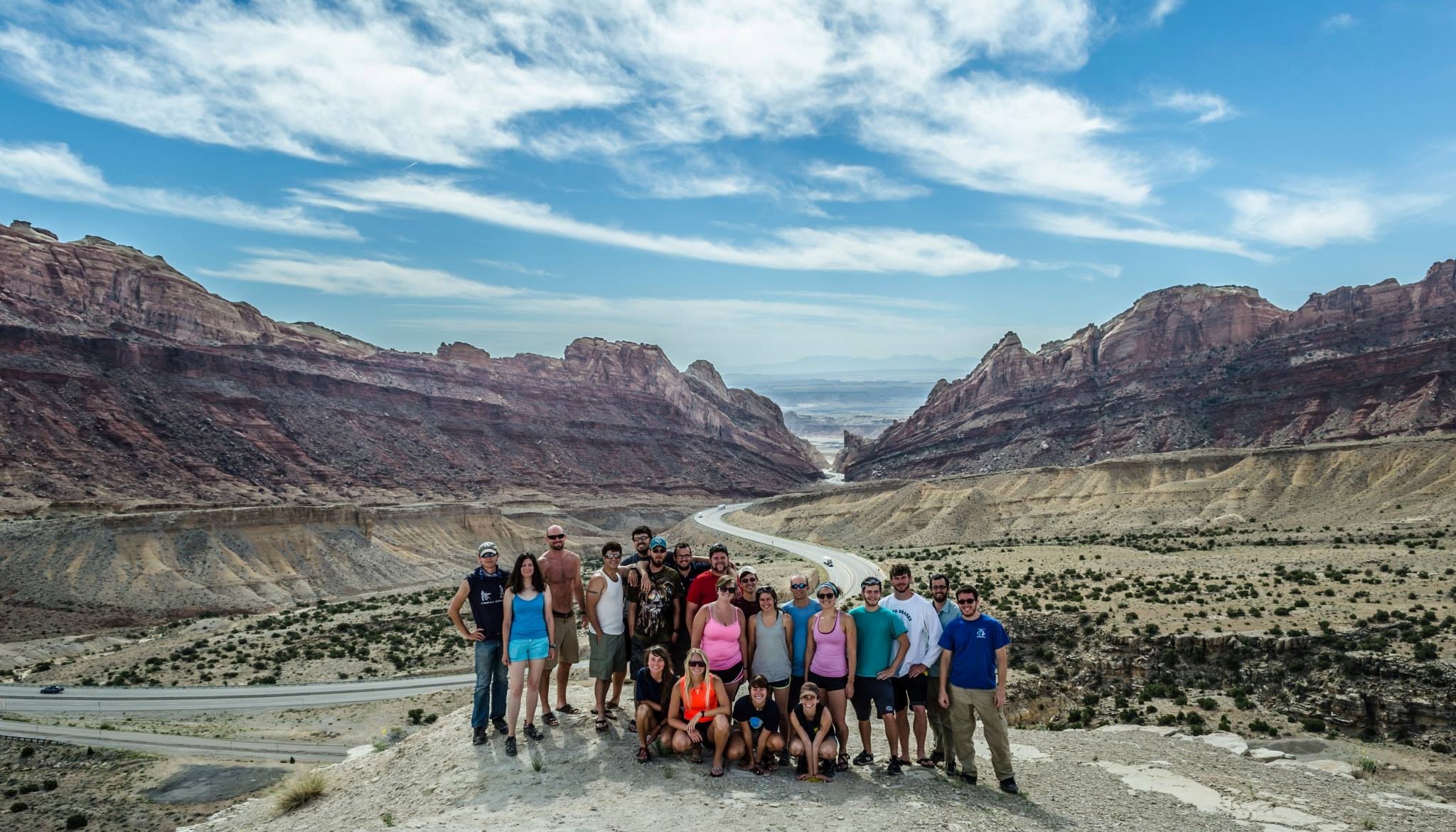
Students At Field Camp
Joe Meert is interested in the reconstruction of ancient supercontinents through the use of paleomagnetism, geochronology and biogeography. In particular Meert is interested in the assembly and breakup of the Neoproterozoic supercontinent, Rodinia and the amalgamation of the southern supercontinent of Gondwana. In recent years this has taken Meert and his research teams to Mongolia, Kazakhstan, Kyrgyzstan and India. Future planned projects are for further studies in India and the southern and western Urals. For more information/publications and research updates visit his website at